Sustaining Family Traditions Through Water Stewardship: BMP Success for Sonderhoffs
The Sonderhoff Family Farm faced immense challenges during the drought of 2023. “Our small, family-owned farm produces mainly grapes for wine production and lambs for meat production. We dry-farm our grape vines, and this approach had worked well until 2023, which turned out to be an extremely dry year,” said Marina Sonderhoff.
“Our region experienced very little rain during the 2022/23 winter as well as a dry 2023 growing season. As a result, there were extreme shortages of hay, which directly affected our lamb production. Also, the majority of our replacement grape-vine transplants died due to insufficient moisture, and yields from our mature grape plants were low since the plants suffered from water stress. During that year, our local aquifers were running very low on water and we were asked to reduce water use wherever possible. This led us to explore ways of reducing our reliance on well water. Since being able to collect rain would help us achieve that, we were very interested to apply for the [Water Infrastructure category].”
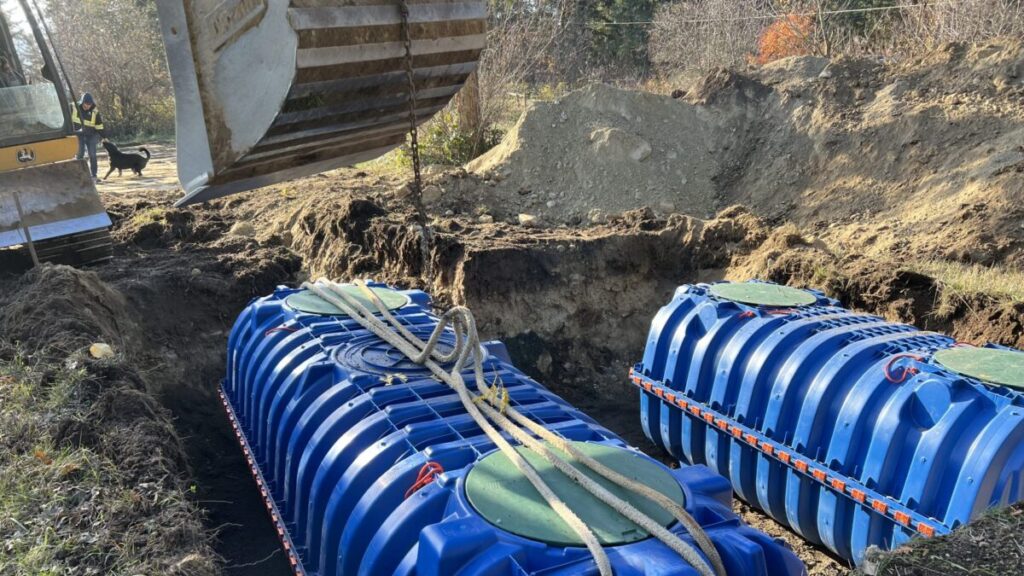
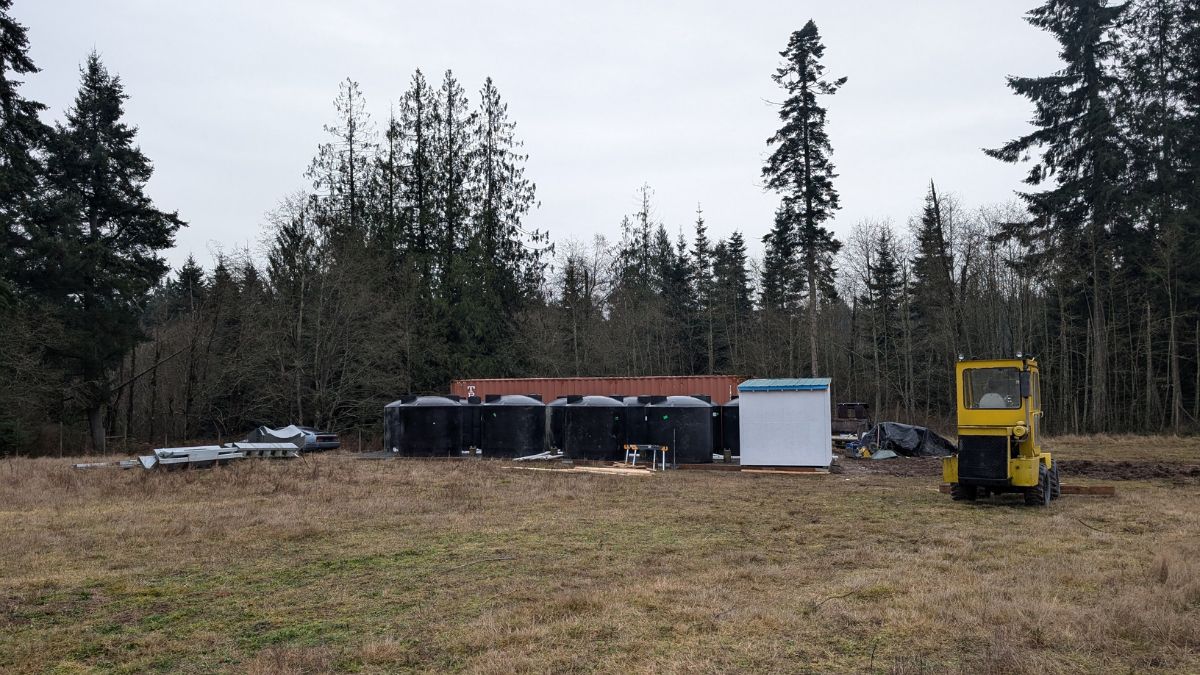
Through the Beneficial Management Practices (BMP) Program, the Sonderhoffs installed 11 large above-ground storage tanks, each with a capacity of 6,800 liters, to harvest rainwater from existing and new roofs. With a total storage of 75,000 liters, the farm can now collect and store rainwater during the wet winter months, providing a critical water reserve for livestock and young vine transplants during periods of drought.
This rainwater harvesting system significantly reduces pressure on local aquifers and increases the farm’s resilience to climatic extremes, ensuring water security and supporting long-term productivity. “We believe that being able to store 75,000 liters of rainwater, which we can use to water our livestock and grow our transplants during droughts, makes our farm more sustainable as well as more resilient to climatic changes,” shares Marina Sonderhoff.
The BMP project at Sonderhoff Family Farm exemplifies how water infrastructure improvements can safeguard agricultural operations against the growing threat of water scarcity, protecting both productivity and the environment for future generations.
Funding for the BMP program has been provided by the Sustainable Canadian Agricultural Partnership, a $3.5 billion, 5-year agreement between the federal, provincial and territorial governments. Additional funding has been provided by CleanBC. The program is delivered by IAF.