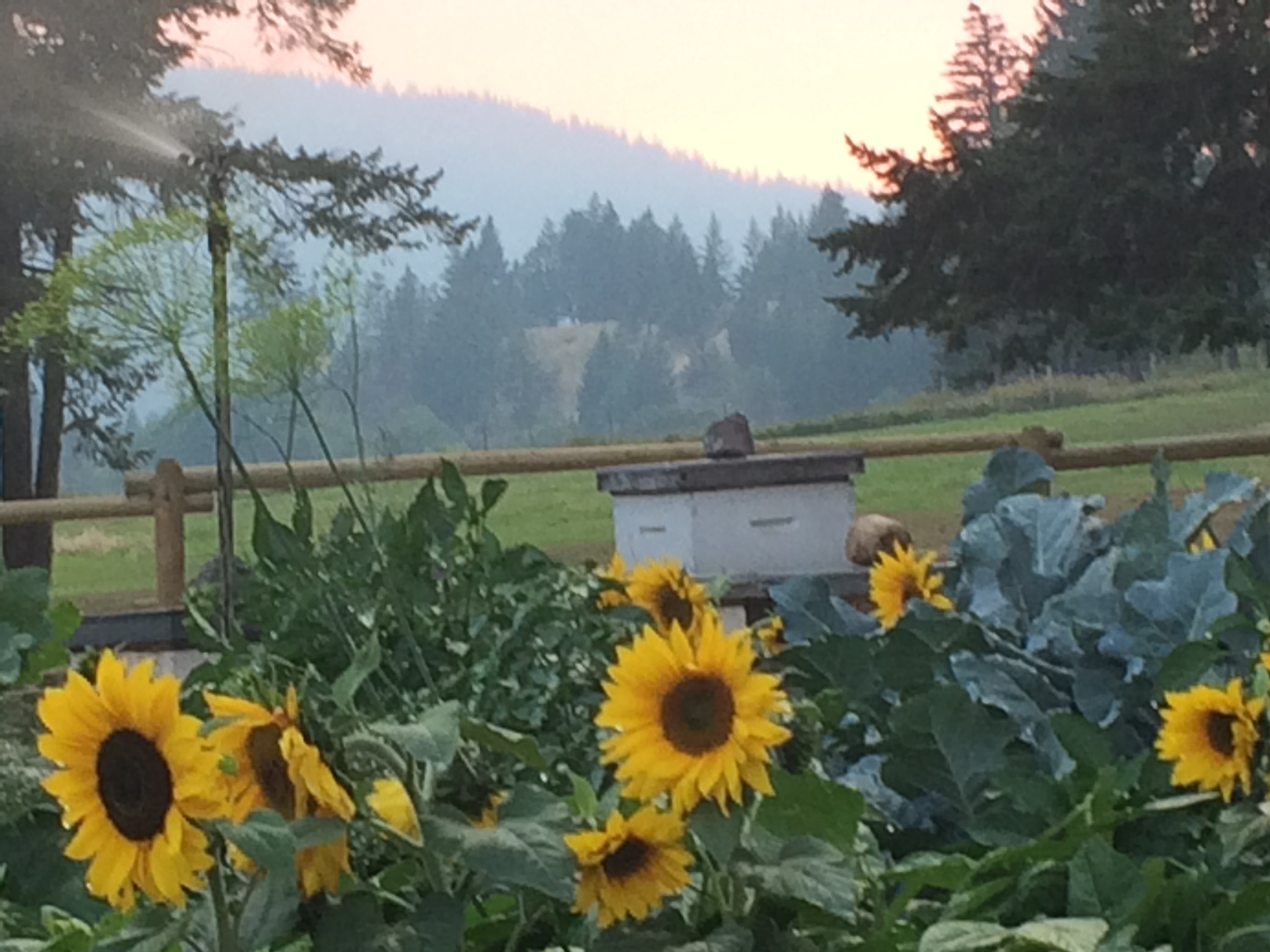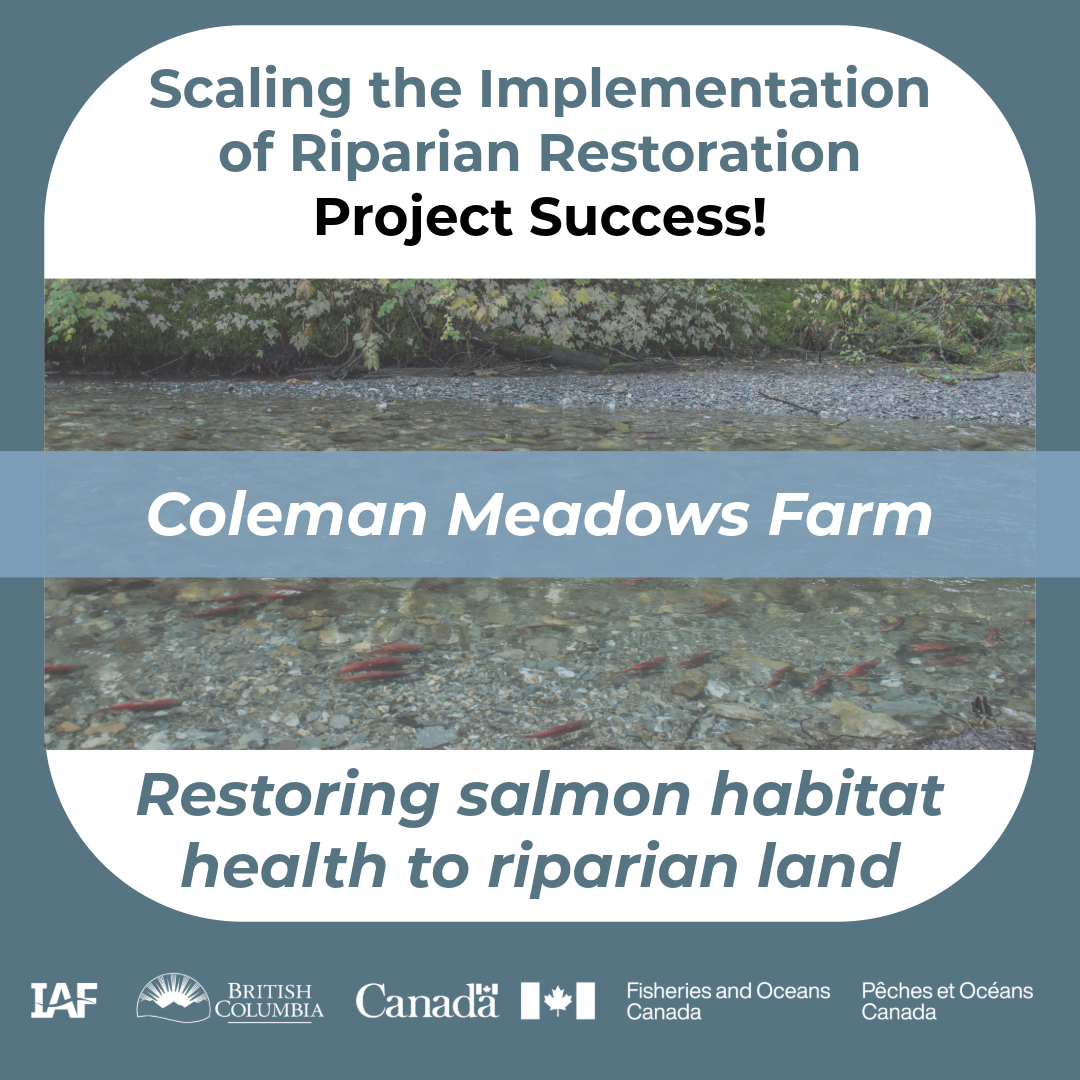
At Coleman Meadows Farm, stewardship is a family commitment. Owners Russell and Jennifer Dyson, along with their son Edward and his wife Melanie, manage a diverse 170‑acre dairy operation that includes both water buffalo and conventional cows. Nearly half the property remains forested, and a coho salmon‑bearing stream winds through the land, a natural asset the family takes seriously.
One of the stream’s tributaries, however, had been heavily impacted by past human activity long before the Dysons arrived. The banks were barren, invasive species had taken hold, and the waterway lacked the vegetation needed to support healthy water quality and stable habitat conditions for salmon.
Through the Environmental Farm Plan process, the Dysons identified opportunities to improve their environmental footprint and fish habitat. That planning opened the door to participating in the Scaling the Implementation of Riparian Restoration (SIRR) Program, which utilizes a Payment for Ecosystem Services (PES) model, that provided the support needed to restore the degraded tributary.
Working with the program, the farm:
- Planted native species to improve water quality, stabilize banks, and regulate water temperature
- Addressed invasive species, including scotch broom and reed canary grass
- Used tree guards to protect young plants from being smothered by reed canary grass
- Improved airflow and shading around new plantings to help them survive summer droughts
For Russell Dyson, the value of the program goes beyond the restoration work itself. He emphasizes how important it is for farmers to have support for projects that often sit on the “wish list” but are hard to tackle amid daily farm demands.
He also appreciates the program’s flexibility from riparian planting to culvert replacement and how it balances environmental benefits with practical improvements to farm operations.
Coleman Meadows Farm is now seeing the results with healthier riparian areas, better habitat for coho salmon, and a stronger, more resilient landscape. It’s a great example of how voluntary stewardship programs can help farmers protect the land.
IAF gratefully acknowledges the financial support of the Government of British Columbia as well as the Government of Canada through Fisheries and Oceans Canada (DFO) as a part of the BC Salmon Restoration and Innovation Fund (BCSRIF).
BCSRIF aims to support protection and restoration activities for Pacific salmon and other priority wild fish stocks. BCSRIF also supports projects that will ensure the fish and seafood sector in BC is positioned for long-term environmental and economic sustainability.