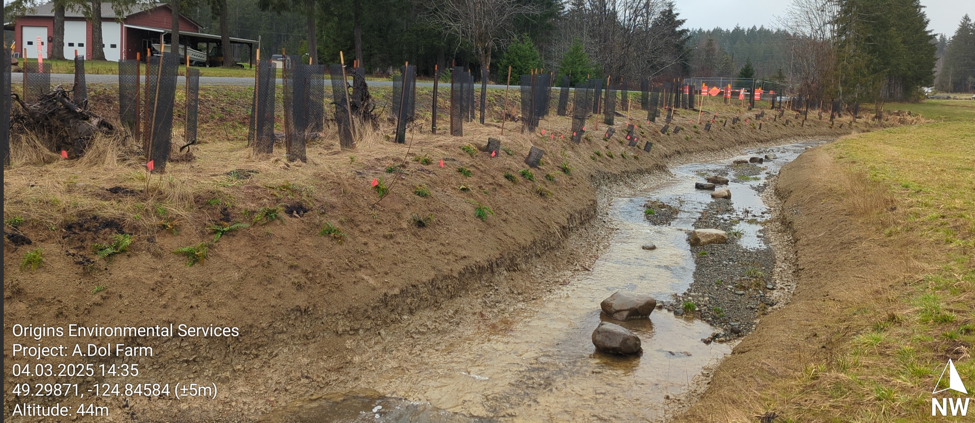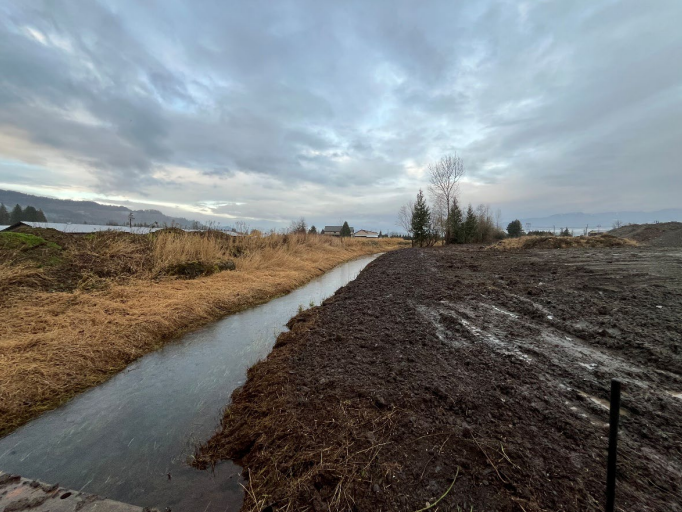
From the banks of Marshall Creek to the winding edges of the Sumas and Hope sloughs, critical salmon habitat across the Fraser Valley is healthier today thanks to a major multi‑site restoration effort led by the Fraser Valley Watersheds Coalition (FVWC). Through the Scaling the Implementation of Riparian Restoration (SIRR) Program, using a Payment for Ecosystem Services (PES) model, and support from local farmers, contractors, and community partners, thousands of native trees and shrubs now line revitalized riparian zones, invasive plants have been removed, and riverbanks once at risk of erosion are stabilizing and thriving.
Between June 2025 and February 2026, FVWC completed maintenance and enhancement work across six privately owned farms, each connected to waterways known to support Pacific salmon species including coho, chum, pink, and various trout. These efforts not only restore ecological processes but also strengthen the long‑term resilience of salmon populations deeply intertwined with the region’s cultural, ecological, and agricultural history.
At a Glance
Across all farms, the FVWC team achieved remarkable cumulative results:
- 15,691 m² of riparian habitat cleared of invasive blackberry and reed canary grass
- 11,346 m² further enhanced through root removal and native plantings
- 25,496 indigenous trees, shrubs, and live stakes planted
- Dozens of sites protected from beaver herbivory to support young vegetation
- Ongoing landowner engagement and stewardship education
These actions help rebuild shaded, cool-water environments essential for salmon spawning and rearing, while also stabilizing banks, improving biodiversity, and enhancing water quality.
————————————————————————————————————————-
Highlights From the Restoration Sites
Bakerview EcoFarm: Restoring Salmon Habitat on Marshall Creek
Marshall Creek runs directly through this Abbotsford dairy farm and supports multiple salmon species. The FVWC team removed 3,034 m² of invasive plants, planted 895 potted trees and shrubs and 1,717 live stakes, and installed herbivore guards to protect vulnerable young plants. These improvements increase shade and bank stability—both critical for salmon health.
Cedar Isle Farm: Enhancing the Banks of Maria Slough
At this Agassiz grain and vegetable farm, FVWC restored 5,251 m² of riparian habitat along Maria Slough, a waterway connected to endangered Oregon spotted frog habitat and local salmon pathways. The team installed 645 native shrubs and trees and an impressive 6,805 live stakes, creating dense riparian vegetation that benefits amphibians, birds, insects, and fish alike.
Shadow Ridge Dairy: Boosting Biodiversity Along Agassiz Slough
Though small in acreage, this hazelnut farm saw 593 m² of invasive blackberry and burdock removed and replaced with 95 native plants and 1,550 live stakes. These plantings strengthen the slough’s ecological integrity and contribute to larger watershed-scale salmon recovery efforts.
Dykshoorn Farm: Restoring Salmon Riverbanks Along the Sumas River
Bordering the Sumas River, a corridor for coho, chum, and pink salmon, this property received extensive intervention. FVWC restored 2,618 m² of riparian zone, removing old, buried debris and invasive vegetation, then planting 217 native shrubs and trees and 3,570 live stakes to support erosion control and habitat diversity.
DeVry Greenhouses: Expanding Habitat Along Hope Slough
This 79‑acre property saw 2,276 m² of reed canary grass and blackberry removed, followed by the planting of 445 potted native plants and 5,580 live stakes. Hope Slough is vital for the endangered Salish Sucker, and restoration here also enhances salmon movement and refuge areas during high‑water events.
Cheam View Poultry: Revitalizing Creek Habitat in Chilliwack
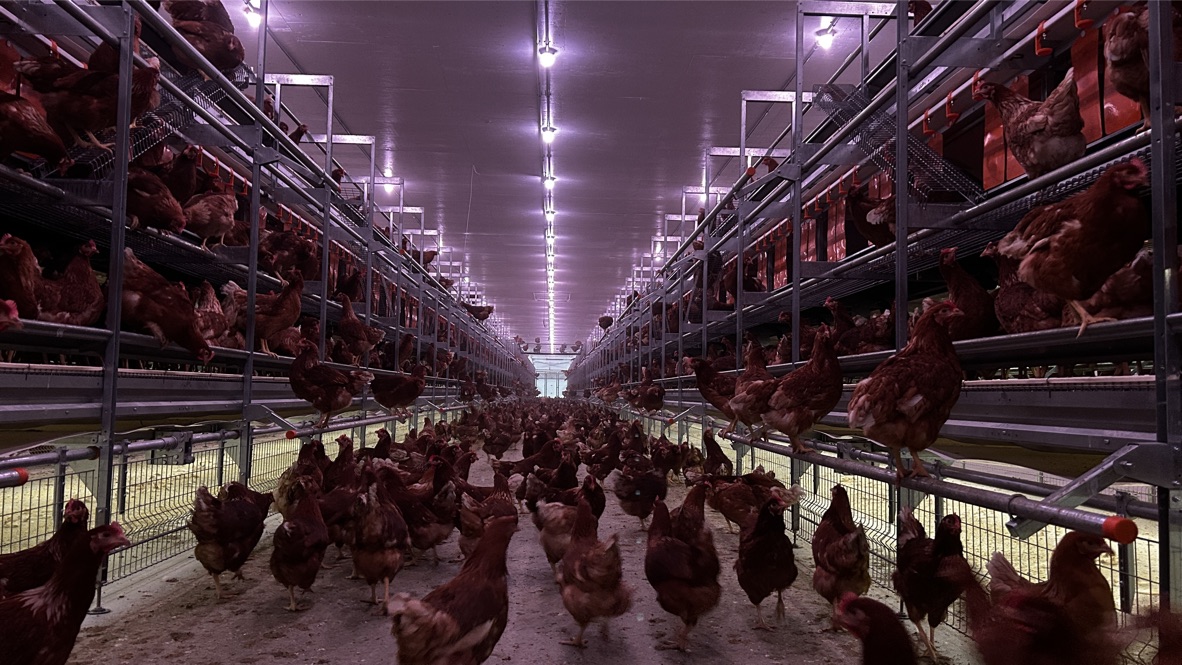
FVWC restored 1,919 m² along a creek flowing through this poultry farm, planting 437 native shrubs and trees and 3,540 live stakes after mechanically removing blackberry. The transformation boosts bank resilience, reduces erosion, and enhances the creek’s suitability for salmon.
————————————————————————————————————————-
Healthy riparian zones are essential for salmon at every life stage. Native vegetation shades the water, keeping temperatures cool; roots strengthen banks and reduce sedimentation; and plant diversity supports insects that become food for juvenile fish.
By partnering directly with farmers, the FVWC ensures that restoration efforts reflect both ecological priorities and landowner needs. This collaborative approach strengthens stewardship, expands salmon-friendly habitat across multiple watersheds, and builds long-term resilience into agricultural landscapes.
The success of the 2025–2026 restoration season lays strong groundwork for continued salmon recovery in the Fraser Valley. As native plants mature, their ecological benefits will multiply, offering cooler water, improved habitat complexity, and stronger, more connected riparian corridors.
The FVWC and participating landowners plan to monitor and expand plantings, protect young vegetation, and continue removing invasive species in 2026 and beyond.
IAF gratefully acknowledges the financial support of the Government of British Columbia as well as the Government of Canada through Fisheries and Oceans Canada (DFO) as a part of the BC Salmon Restoration and Innovation Fund (BCSRIF).
BCSRIF aims to support protection and restoration activities for Pacific salmon and other priority wild fish stocks. BCSRIF also supports projects that will ensure the fish and seafood sector in BC is positioned for long-term environmental and economic sustainability.